Thursday, August 19, 2010

19 August 1960-Francis Gary Powers is convicted of espionage sentence to 10 years in prison while the first CORONA film capsule is successfully recovered

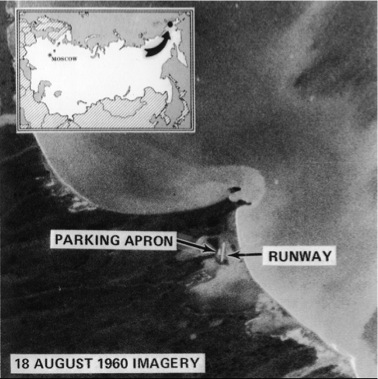
corona2h-2010-08-19-07-41.jpg

First satellite image from CORONA, the world’s first photo-reconnaissance satellite

Khrushchev_U2-2010-08-19-07-41.jpg

Soviet First Secretary Nikita Khrushchev views wreckage of Powers’ U-2 aircraft

On 4 July, 1956, the first U-2 reconnaissance flight took place over the Soviet Union. The plane, flying at an altitude of nearly 70,000 feet, took high-resolution photographs of Soviet military installations around the city of Leningrad and the Soviet Northern Fleet bases around Severomorsk. For the first time the U.S. had precise insight into the Soviet military threat, but this insight came at a significant risk. Flying reconnaissance aircraft over another country’s airspace was tantamount to an act of war. Flying reconnaissance aircraft over the airspace of the ultra-paranoid Soviet Union was extremely dangerous, but President Eisenhower took the risk to gain insight into the missile and bomber threat posed by the Soviet Union.

Each U-2 flight had to be approved by President Eisenhower, and each time the CIA approached him with a flight request, Eisenhower would make the agency prove why the flight was needed. At the same time the U-2 flights were taking place, the Air Force and CIA were working on the world’s first photo-reconnaissance satellite. The satellite, called CORONA, would take pictures on film capsules, then eject the capsule over the Pacific Ocean, where an Air Force recovery plane would grab it in mid-air. There was some concern that orbiting a satellite over a country’s airspace might be the same as violating a country’s airspace with a U-2, but this concern was put to rest on 4 October, 1957, when the Soviet Union launched Sputnik, the world’s first satellite. Sputnik orbited the Earth by passing over the United States several times a day, giving the U.S. freedom to orbit a satellite over the Soviet Union.

U-2 flights were providing valuable intelligence on the Soviet military posture, but the flights could only cover small sectors of the world’s largest country. There were many bases, particularly ICBM bases, that remained outside the approved flight paths of the planes. The launching of Sputnik in 1957 added greater urgency for more missile base coverage, since placing a satellite in orbit required a missile with a significant amount of thrust, thrust which could in turn be used for more powerful ICBM’s aimed at the U.S. In 1960 President Eisenhower was scheduled to participate in a summit with Khruschchev, President DeGaulle of France, and Prime Minister Macmillan of the UK, with a subsequent trip to Moscow. Before these trips, however, CIA convinced Eisenhower that there was the need for one more U-2 flight. This flight, launched on 1 May, 1960, piloted by Francis Gary Powers, ended disastrously with the plane’s shoot down by a SAM over the Soviet city of Sverdlovsk. Powers was captured alive, imprisoned, and put on trial for espionage.

In one of history’s greatest ironies, on the date that Powers was convicted and sentenced to 10 years for spying for flying his U-2 over Soviet airspace, the first CORONA film capsule was recovered over the Pacific. On the roll of film was the world’s first satellite image from space. The image, of Mys Shmidta Air Field, which is 600 miles from Nome, Alaska, was incredibly crude by today’s standards, but it was one of the most significant intelligence feats in history. A satellite, orbiting without the knowledge of the target country, had provided intelligence on the target country without risking the life of a pilot, or incurring the threat of war. The first CORONA mission also covered far more territory on its one roll of film than all the U-2 flights that had taken place since 1956. A new era had begun. The CORONA satellite imagery also demonstrated that the so called “missile-gap” between the U.S. and the Soviet Union was decidedly to the advantage of the United States. The same was true of the bomber gap, and this intelligence had been gathered risk-free.

Sunday, August 15, 2010

15 August 1534-Ignatius Loyola Establishes the Society of Jesus

180px-St_Ignatius_of_Loyola_%281491-1556%29_Founder_of_the_Jesuits-2010-08-15-18-41.jpg

St. Ignatius of Loyola, as painted

by Rubens

Almost all European/Western Civilization history books cover the formation of the Society of Jesus, also known as the Jesuits, as this Roman Catholic priestly order had a profound effect on the spreading of both Catholic Christianity and Western European mores. The order was founded by Ignatius of Loyola on 15 August, 1534. 15 August is also the Feast of the Assumption, which is the day Roman Catholics celebrate as the day the Virgin Mary was bodily assumed into heaven, being spared the mortal pain of death.

Ignatius was born in Spain, and started his adult life as a solider. He participated in many battles, without suffering serious wounds, but on 21 May, 1520, his luck ran out. While fighting French forces in the Battle of Pamplona, a cannonball wounded one leg and severely broke the other. Ignatius required a long convalescence, and the leg had to be broken and re-set at least twice. During this time he read The LIfe of Christ by Ludolph of Saxony. This work, which was written in a style so that the reader experienced the events of the Gospels as though he were actually present at the time, had a profound effect on Loyola’s life. As he continued to heal, he read more religious works, which led a total re-dedication of his life. After his recovery from his wound, he spent several months in a cave near Catalonia, where he practices religious asceticism. When this period of prayer and study were over, he traveled to Palestine for three weeks in 1523, then returned to Spain. From Spain he journeyed to Paris, which at the time was a city in great upheaval due to battles between Catholics and Protestants. Martin Luther’s Reformation had reached France, and the clash of Protestant theology with Loyola’s fervent Catholicism spurred him to attend the University of Paris as a theology student.

While attending university, Loyola become close friends with the following individuals:

Francis Xavier,

Alfonso Salmeron,

Diego Laynez

Nicholas Bobadilla

Peter Faber

Simão Rodrigues

On 15 August, 1534, Loyola and his six companions met in the crypt of the Church of Our Lady of Montmartre, and pledged themselves to a life of poverty, chastity and obedience to the Pope as the newly created Society of Jesus. The primary mission of the order was to serve as the Pope’s missionaries, so the companions traveled to Rome to seek an audience with Pope Paul III. In 1537 Pope Paul III gave his blessing to the order and had the companions ordained as priests.

The Jesuits first set out to create schools and universities in Europe, as Loyola believed that the first step in arresting the Protestant Reformation was in educating the faithful. Loyola believed that one of the causes of the Protestant Reformation was an ill-informed, illiterate Catholic priesthood. Education would be his first bastion in re-claiming the world for the Catholic Church. Since he had started his life as a soldier, Loyola formed the Jesuits along military lines. The head of the order is called the Father-General, and there are rigid guidelines and steps before a man is ordained as a Jesuit priest. The Jesuit process, which is called formation, usually takes from 10-12 years, based on the applicant’s life experience. In addition to taking the normal priestly vows of poverty, chastity and obedience, a fully professed Jesuit swears a special fourth vow: obedience to the Pope and any missions he may request. Loyola’s creed for the Jesuit’s obedience to the Pope is eloquently stated here:

That we may be altogether of the same mind and in conformity with the Church herself, if she shall have defined anything to be black which appears to our eyes to be white, we ought in like manner to pronounce it to be black. For we must undoubtingly believe, that the Spirit of our Lord Jesus Christ, and the Spirit of the Orthodox Church His Spouse, by which Spirit we are governed and directed to Salvation, is the same.

As the Jesuits constructed schools and universities in Europe, they also engaged in counter-Reformation activities. Poland and Bohemia were already strong Protestant bastions, but Loyola’s Jesuits were so effective that they turned these territories into the Catholic strongholds that they are today. The Jesuits also began extensive missionary work in the Americas and Asia. Francis Xavier spread the Gospels to Japan and China, following the Jesuit model of focusing conversion on the rulers and other powerful figures. As European expansion spread in the Americas, Jesuit mission activities and school construction came along with the explorers. Today there are 28 Jesuit colleges and universities in the United States, an over 50 secondary schools. The order formed by St. Ignatius Loyola (he was canonized in 1622), had, and continues to have, a profound effect on civilization.

Sunday, August 1, 2010

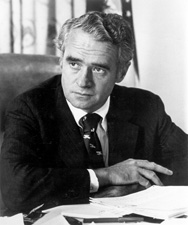
1 August 1972-Senator Thomas Eagleton withdraws as Democratic VP Nominee

ThomasEagleton-2010-08-1-15-39.jpg

Senator Thomas Eagleton, D-Missouri

The 1972 Presidential campaign is mostly known for the Watergate break-in and Nixon’s landslide victory over Senator George McGovern, but one of the factors in that victory was the selection and removal of Senator Thomas Eagleton as McGovern’s running mate.

By the time the Democrats convened for their convention in Miami, President Nixon appeared unbeatable, with a double-digit lead over McGovern in almost all national polls. Polling showed that the only way McGovern had a chance to beat Nixon was by selecting Senator Edward Kennedy as his running mate. Despite the Chappaquiddick disaster in 1969, Kennedy was still immensely popular amongst the Democratic faithful, but Kennedy adamantly refused to be on the ticket. His refusal was echoed by other high profile Democrats such as Walter Mondale, Hubert Humphrey (who had served and been humiliated as Johnson’s VP, losing the 68 election to Nixon by a whisker), Edmund Muskie and Birch Bayh, all of whom could smell the landslide defeat coming to McGovern in November. McGovern decided to offer the slot to Thomas Eagleton, Senator from Missouri, even though he knew very little about Eagleton. This lack of knowledge would prove to be his undoing.

Eagleton accepted the nomination, and promised to bring his medical records with him to Miami for McGovern’s review, but he didn’t. He also failed to tell McGovern and the Democratic party leadership that he had checked into a hospital 3 times between 1960 and 1966 for mental and physical exhaustion, depression, and on at least one hospital stay he had been given electro-shock therapy. His use of Thorazine, a powerful anti-depressant medication was also not disclosed, but when it came up during the initial meeting with McGovern, Eagleton dismissed any concerns about the drug, stating that the prescriptions were in his wife’s name, not his. That subterfuge should have been a red flag for McGovern, but he did nothing about any concerns he had.

When McGovern got the medical records, he read that Eagleton suffered from “manic-depressive” and “suicidal tendencies”. McGovern then called two of Eagleton’s doctors, both of whom said they had “grave concerns” about Eagleton’s mental health. Now McGovern was in trap. On the public level, if he dropped Eagleton, the Republicans would pounce on his terrible decision making and lack of vetting. If he didn’t drop him, he would face tremendous pressure from rank and file Democrats, many of whom already didn’t like him and saw him as an enormous albatross taking the party towards a massive electoral defeat in November.

On a private level, McGovern worried about how his daughter Teresa would handle the announcement that he was dropping Eagleton because of his mental health problems. Teresa, like Eagleton, also suffered from depression, which would ultimately lead to her death in 1994. The editorial pages of The Washington Post and New York Times added fuel to the fire, when both papers said that Eagleton had to be dropped from the ticket, warning that a man with these problems could not be a heartbeat away from the Presidency.

McGovern initially said that he stood by Eagleton “1000%”, but pressure from party leaders continued to mount. Finally, McGovern made the decision to drop Eagleton, with Eagleton officially leaving the ticket on 1 August, 1972. Sargent Shriver, brother-in-law to Ted Kennedy, agreed to be the sacrificial lamb for the November slaughter, accepting McGovern’s offer of the VP nomination.

Later in life McGovern said he should have stuck by his initial decision to keep Eagleton, and he blamed his own ignorance of mental illness as the main reason for his decision to force Eagleton off the ticket. The selection of Eagleton and the cursory vetting showed just how much of the leadership of the Democratic party has passed out of the hands of the precinct captains and ward bosses and into the hands of the “people”, who proceeded to drive the party into a massive ditch. Nixon routed McGovern on 7 November 1972, carrying 49 states and 62% of the popular vote. McGovern carried Massachusetts and the District of Columbia. As the Watergate scandal erupted, I started seeing bumper stickers around my hometown of DC that read “Don’t blame me, I live in Massachusetts/DC”.

Eagleton went on with his Senate career, getting re-elected in 1974, 1980 and deciding not to run in 1986. After the Senate he was instrumental in brining the LA Rams to St. Louis. He died in 2007, and shortly after his death he was revealed as the source behind one of Robert Novak’s most explosive columns during the 1972 campaign. In May of 72 Novak published that “a Democratic senator says ‘people really don’t know McGovern. Once they get to know him, especially in the Midwest and heavily Catholic areas of the country, they’ll find out that he stands for amnesty, acid and abortion’” Amnesty, acid and abortion quickly became the smear Republicans used against McGovern, and when Novak was pressed to name his source, he approached Eagleton for permission to use his name. Eagleton refused, and Novak kept his secret until Eagleton died. There’s no doubt that McGovern would never have picked him as a running mate had he known the source of that quote.

Wednesday, July 28, 2010

28 July 1932-President Hoover orders the Army to disperse the Bonus Marchers

The Bonus Army, or Bonus Marchers, were a group of World War I veterans and their families who came to DC in the summer of 1932. There were about 17,000 World War I veterans, many of whom brought their families with them, raising their numbers to about 43,000 people. In 1924 Congress granted all World War I veterans service certificates, which would mature and be redeemable for cash upon maturation of the certificates. Like most bonds, the maturation date was 20 years from the issuance date, so the certificates would not be redeemable until 1945. This was no problem when the certificates were granted, but the Great Depression struck the country in 1929, and millions of people were thrown out of work and their homes. As the Depression worsened, the veterans decided that early payment of their bonus certificates would be the best way to ease their financial plight, so they assembled and marched on Washington, arriving in the city on 17 June, 1932 and setting up camp in Anacostia Flats.

The veterans organized the camp very well, setting up sanitation facilities, marking off streets in the dirt, and ensuring that only those veterans who had been honorably discharged from the Army could reside in the camp. The camp and the cause of the vets made an impact, as the House passed a bill allowing for early payment of the bonuses, but the Senate balked. President Hoover was also not in favor of early payment, as he and fellow Republicans feared adding to the country’s deficit while the Depression was weighing so heavily on the economy.

On 28 July, 1932, Attorney General Mitchell ordered the DC police to clear the camp. The police entered the camp’s perimeter, met with resistance from the vets, and the police met the resistance by firing and killing two of the veterans. When Hoover heard of this incident, he ordered the Army to move in and clear the camp. The Army, led by Major General Douglas MacArthur, assembled and marched down Pennsylvania Avenue towards Anacostia. MacArthur’s forces were augmented by 6 battle tanks from Fort Meyer, along with a cavalry unit, led by Major George Patton. When the vets saw the units moving down Pennsylvania Avenue towards them, they at first thought that the Army had assembled the parade to pay them homage, until Patton ordered “fix bayonets” and then ordered the calvary unit to charge. Tear gas was also used as the Army moved into the camp. Many of the vets and their families began to flee, and when word of this reached President Hoover, he ordered the assault to stop. MacArthur, believing that the vets represented a Communist plot to overthrow the government, disobeyed the President, and continued the assault, moving into the camp with the full force of the Army. Hundreds of veterans were wounded and several were killed during this action. The camp’s structures were then burned by the Army to prohibit the vets from re-assembling.

When President Roosevelt took office in 1933, he was not in favor of early bonus payment, but when the vets marched again on the Washington, he sent his wife, Eleanor, to visit with them and to listen to their pleas. Eleanor also convinced a large number of the vets to join the Civilian Conservation Corps, putting many of the men to work in building the Overseas Highway, linking the Florida Keys to the mainland. A great hurricane swept over the Keys on Labor Day in 1935, killing over 200 of the veterans working on the highway. Newsreels of the vets once again suffering, made the public groundswell for early bonus payment so great, that Congress granted the vets’ wish in 1936, overriding President Roosevelt’s veto of the measure.

The Bonus Army participants didn’t realize at the time that they were setting the template for better treatment of the nation’s veterans. In 1944 Congress passed the G.I. Bill of Rights, providing for low-interest loans to veterans for buying homes and starting businesses, one year of unemployment payments after leaving the service, and most significantly, generous assistance with college tuition. The G.I. Bill of Rights is perhaps the greatest result of the Bonus Army, who finally made the U.S. government live up to the words of President Abraham Lincoln’s Second Inaugural Address:

“With malice toward none; with charity for all; with firmness in the right, as God gives us to see the right, let us strive on to finish the work we are in; to bind up the nation's wounds; to care for him who shall have borne the battle, and for his widow, and his orphan”

Monday, July 26, 2010

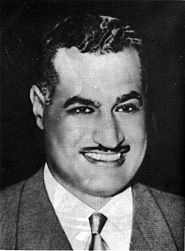
26 July 1956-Nasser nationalizes the Suez Canal

185px-Nasser-2010-07-26-06-47.jpg

Gamel Abdul Nasser

Leader of Egypt 1952-1970

Gamel Abdul Nasser, the dictator of Egypt, saw himself as the unifying force in the Arab world. The British saw him as a usurper who had overthrown the Egyptian King Farouk in 1952. The French saw him as a growing concern to their interests in the Middle East, as Nasser was supplying arms and assistance to the rebels France was battling in Algeria. The Israelis saw him in the same light, as Nasser supplied arms and assistance to Palestinians in the Gaza Strip (which would remain Egyptian territory until the Israelis conquered it during the Six Day War). The United States had mixed feelings about Nasser. On the one hand he was seen as an example of countries throwing off their shackles of European imperialism, but on the other hand he was also seen as an irritant to two of our most important NATO allies, the UK and France. The U.S. ambivalence turned to open hostility when Nasser made plans to purchase arms from Czechoslovakia. Purchasing arms from a Communist country which was in the firm orbit of the Soviet Union was anathema to U.S. Secretary of State John Foster Dulles, an ardent Cold warrior. Nasser went one step further on 16 May 1956, when Egypt recognized the People’s Republic of China. Dulles looked for a way to punish Nasser for his transgressions, and the best way was to cancel an International Monetary Fund loan to Egypt for the construction of a dam on the Nile.

Nasser had hoped to construct the Aswan High Dam to generate more electrical power for his struggling nation, and the cancellation of the IMF loan infuriated him. Egypt simply did not have the internal funds for the construction, and while Nasser had no problems buying arms from Communist nations, he was leery of allowing Soviet technicians into his country for the construction of the dam. Looking around for ways to generate revenue, he cast his eyes on the Suez Canal.

In 1956 the Suez Canal was run by a semi-private/semi-public British and French consortium. Ships paid fees to transit the canal, and the fees went back to Paris and London, despite the fact that the canal was on Egyptian soil. Nasser realized that if he seized and nationalized the canal, those fees would go to Egypt, and that he could use the money to build the dam and for other purposes. On 26 July he gave a speech in Alexandria, damning the western powers for their meddling in the internal affairs of Middle Eastern nations. In the middle of his speech, he deliberately uttered the name “Ferdinand de Lesseps”, the Frenchman who had built the canal in the 1800s. The mention of de Lesseps’ name was a signal to Egyptian armed forces to move in and seize the canal’s operational centers and offices. Nasser informed the British and French that the canal was now Egyptian property, and that the stockholders would be paid the price of their shares at their values when the market closed that day.

Nasser’s actions shocked the West, and the Conservative government of Prime Minister Sir Anthony Eden was especially shocked. Eden came under intense pressure from his backbenchers to do something about the canal seizure and Nasser. That “something” would become the Arab-Israeli war of 1956.

Sunday, July 25, 2010

25 July 1914-Serbia accepts almost all of Austria-Hungary's demands; Austria-Hungary breaks diplomatic relations with Serbia

The ultimatum which Austria-Hungary delivered to Serbia on 23 July 1914 had the tone of a victor nation to one that had been utterly vanquished; yet Serbia had not been vanquished by Austria-Hungary, and the Serbian government had no responsibility for the assassination of Archduke Francis Ferdinand. Although the assassin, Gabriel Princip, was a Serb, and the terrorist group to which he belonged was composed of Serbian/Slavic nationalists, the government in Belgrade had absolutely nothing to do with the financing or organization of the group or Princip’s assassination. To put this event in the context of another famous 20th century assassination: Lee Harvey Oswald murdered President John F. Kennedy. Two days later, Oswald was murdered by Jack Ruby. To the casual observer it would appear that whoever wanted Kennedy dead also wanted Oswald dead, but unless there was direct evidence linking the murder of Kennedy to the murder of Oswald, all one has is coincidence.

Coincidence notwithstanding, Austria-Hungary was determined to obliterate Serbia and its “meddlesome influence” amongst the Slavic inhabitants of the Austro-Hungarian Empire. The ultimatum demanded the suppression of any and all publications critical of Austria-Hungary; all schoolbooks presenting propaganda against Austria-Hungary must be withdrawn; Serbian officials holding feelings against Austria-Hungary must be dismissed from their posts, and that the judicial inquiry into the assassination must be overseen by Austro-Hungarian officials.

Unaware that Austria-Hungary, egged on by Germany, wanted nothing but war with Serbia, the United Kingdom and Russia pressured the Serbs to be as conciliatory as possible in responding to the ultimatum. Sazonov, the Russian foreign minister, even went so far as to say that if war came between Austria-Hungary and Serbia, Belgrade should not put up a fight but allow for occupation, then appeal for arbitration and settlement at either the International Court at The Hague, or by the Great Powers (Russia, France, Italy, Germany, the United Kingdom). With this type of pressure from Serbia’s main ally, Russia, Belgrade said that it would comply with all of Austria-Hungary’s demands except for the last: allowing Austro-Hungarian officials to oversee the judicial inquiry into the Archduke’s assassination.

On 25 July the Serbian government replied to the Austro-Hungarian ultimatum, giving in to all the demands except the participation into the judicial inquiry, protesting that to do so would violate their constitution and laws on criminal procedure. The Serbs also suggested that the entire matter be handed over to the International Court or to the Great Powers for arbitration. All the Great Powers were relieved that the Serbs had been so accommodating; all that is except Austria-Hungary and Germany. When the Austro-Hungarian ambassador to Serbia, Baron Giesl, was given the Serb reply to the ultimatum, he glanced at it just long enough to see what the Serbs had not agreed to. Finding the one refusal, he figured that his country now had sufficient grounds for war, and boarded the train from Belgrade to Austria-Hungary. Upon his arrival in Austro-Hungarian territory, he telegraphed the Serb “refusal”, which prompted Vienna to break diplomatic relations with Serbia. The headlong rush into war was gathering more steam.

Friday, July 23, 2010

23 July 1914-Austria-Hungary delivers an ultimatum to Serbia on the Assassination of Archduke Francis Ferdinand

Europe_1914-2010-07-23-06-02.png
The tinderbox of Europe-1914
On 28 June, 1914, Archduke Francis Ferdinand, heir to the throne of Austria-Hungary, was assassinated in Sarajevo. The assassin, Gabriel Princip, belonged to a Serbian terrorist society called the Black Hand. Austria-Hungary blamed the Serbian government for funding and controlling the Black Hand, but the Serbian government vehemently (and truthfully) denied any responsibility for the actions of the terrorist group. Nevertheless, Austria-Hungary saw the assassination as a golden opportunity to crush Serbia once and for all.
The Dual Monarchy of Austria-Hungary was a swollen polyglot by 1914. The empire was dominated by Austrians and the Magyars of Hungary, both minority groups in a nation dominated by Czechs, Slovaks, Serbs, Croats, and a host of other Slavic people, most of whom longed for their own countries. The independent Slavic nation of Serbia acted as a magnet for those hopes, serving as a source of ethnic unrest against Emperor Franz-Joseph of Austria-Hungary. Austria-Hungary never missed an opportunity to humiliate Serbia on the world stage, the latest act of humiliation taking place in 1908 with the annexation of the Serbian provinces of Bosnia-Hercegovina. That annexation had nearly caused a war between Austria-Hungary and Russia, as Russia saw one of its roles on the world stage as protector of Europe’s Slavic peoples. Germany, Austria-Hungary’s powerful alliance partner, forced the Russians to back down by threatening war, which Russia in 1908 was in no condition to fight, having just been defeated by Japan in 1905.


After the assassination of Franz-Ferdinand, Austria-Hungary swiftly made plans for a quick invasion and occupation of Serbia, and Germany approved of these plans, provided they were carried out swiftly before the other European great powers could react. Throughout the month of July Germany constantly harangued Austria-Hungary to take swift action against Serbia. Germany believed that if Austria-Hungary did nothing against the “Slav menace”, the Austrian Empire would implode and shatter into independent states, destroying Germany’s one certain ally, and leaving Germany to face France, the United Kingdom and Russia alone should war come one day. Accordingly, when the Austro-Hungarian ambassador to Germany informed Kaiser Wilhelm II that Austria-Hungary intended to “deal with Serbia”, the Kaiser gave his full endorsement and a blank check to Austria-Hungary for war.


All of Europe knew that something was going to happen with Serbia, but the ultimatum delivered to Belgrade by Vienna on 23 July shocked all the powers. The note charged that “the murder of Sarajevo was prepared in Belgrade”. It contained the following demands:


All Serbian publications critical of Austria-Hungary must be suppressed.
All schoolbooks presenting propaganda against Austria-Hungary must be withdrawn
All Serbian government officials, army officers, and schoolteachers holding these views must be dismissed
Specific officials and officers named in the note must be arrested
All of the above changes must be monitored by Austrian officials inside Serbia
Austrian officials must be allowed to participate in the judicial inquiry into the plot behind the murder of Archduke Francis Ferdiand


With this ultimatum, the fuse to World War I was lit.